

Rear delts can hide behind pulls.
Rows and pulldowns can involve rear delts, but that does not always mean they received enough direct work for your goals.
Learn: Training Gaps
Muscle Coverage Guide
There is no universal answer for every lifter. Your missed areas depend on the workouts you actually do.
That is why muscle coverage matters: it helps you move from guessing about gaps to reviewing what your logged training actually touched.
Short Answer
Rear delts, calves, hamstrings, core, upper back, and adductors are common blind spots in self-built lifting routines. But the real answer depends on your split, your exercise choices, and what you actually log week after week.
A muscle can feel indirectly involved without receiving much direct mapped work. That is where a visual coverage layer becomes useful.
Rows and pulldowns can involve rear delts, but that does not always mean they received enough direct work for your goals.
They often live at the end of a session, which makes them easy to skip when time or energy runs short.
Compound lifts demand bracing, but that is not the same as logging dedicated core work.
Squats, presses, and rows are easy to anchor. Hinge patterns and posterior chain accessories can quietly fall behind.
Find Your Own Gaps
Via Fortis maps logged lifts to primary and supporting muscles, then shows which areas received more or less work in Body Map.
That helps you spot quiet muscles without rebuilding every exercise from memory or turning your program into a spreadsheet.
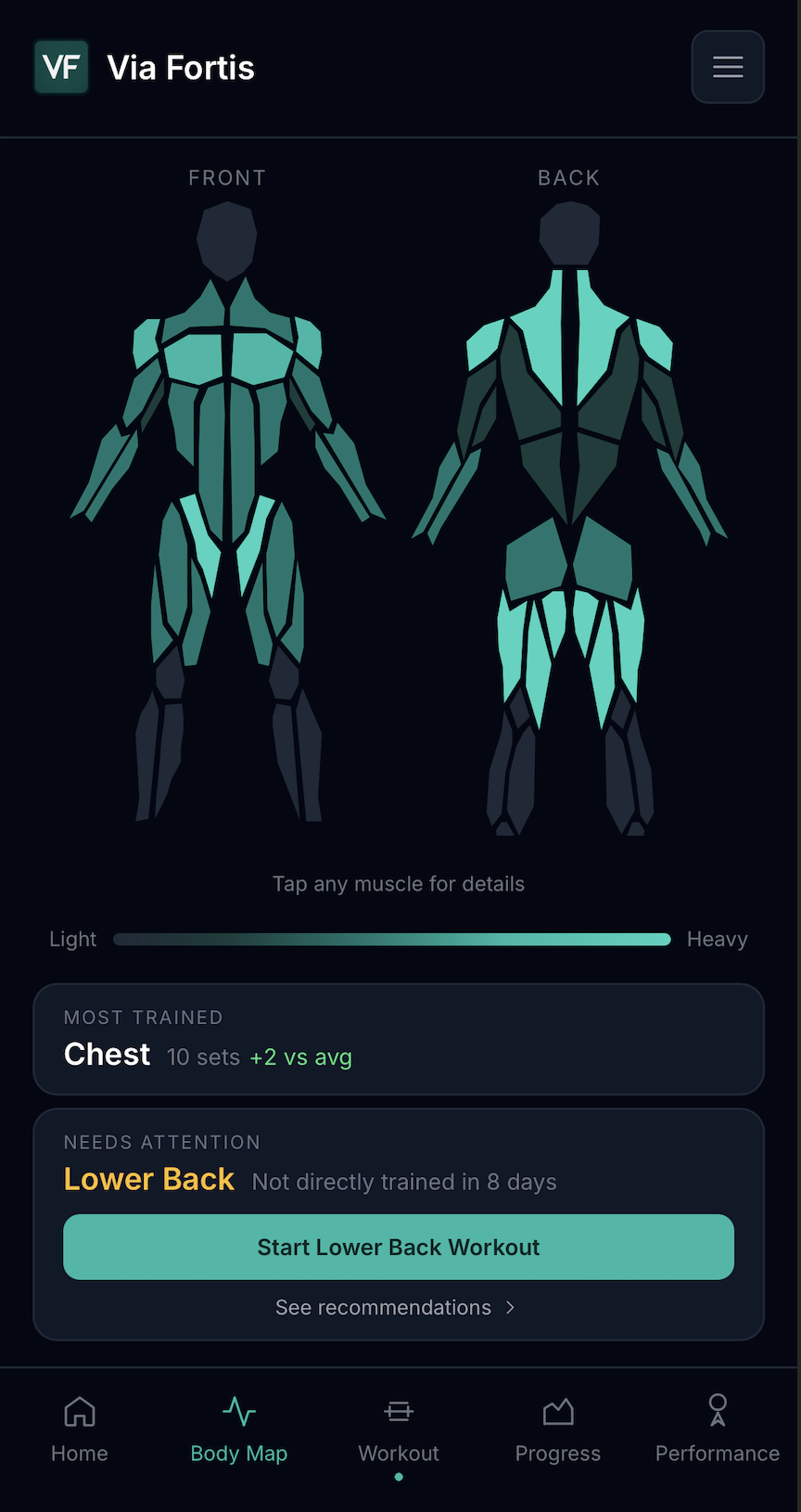
How to Use This
A quiet muscle may be intentional. The question is whether the pattern matches the training you meant to build.
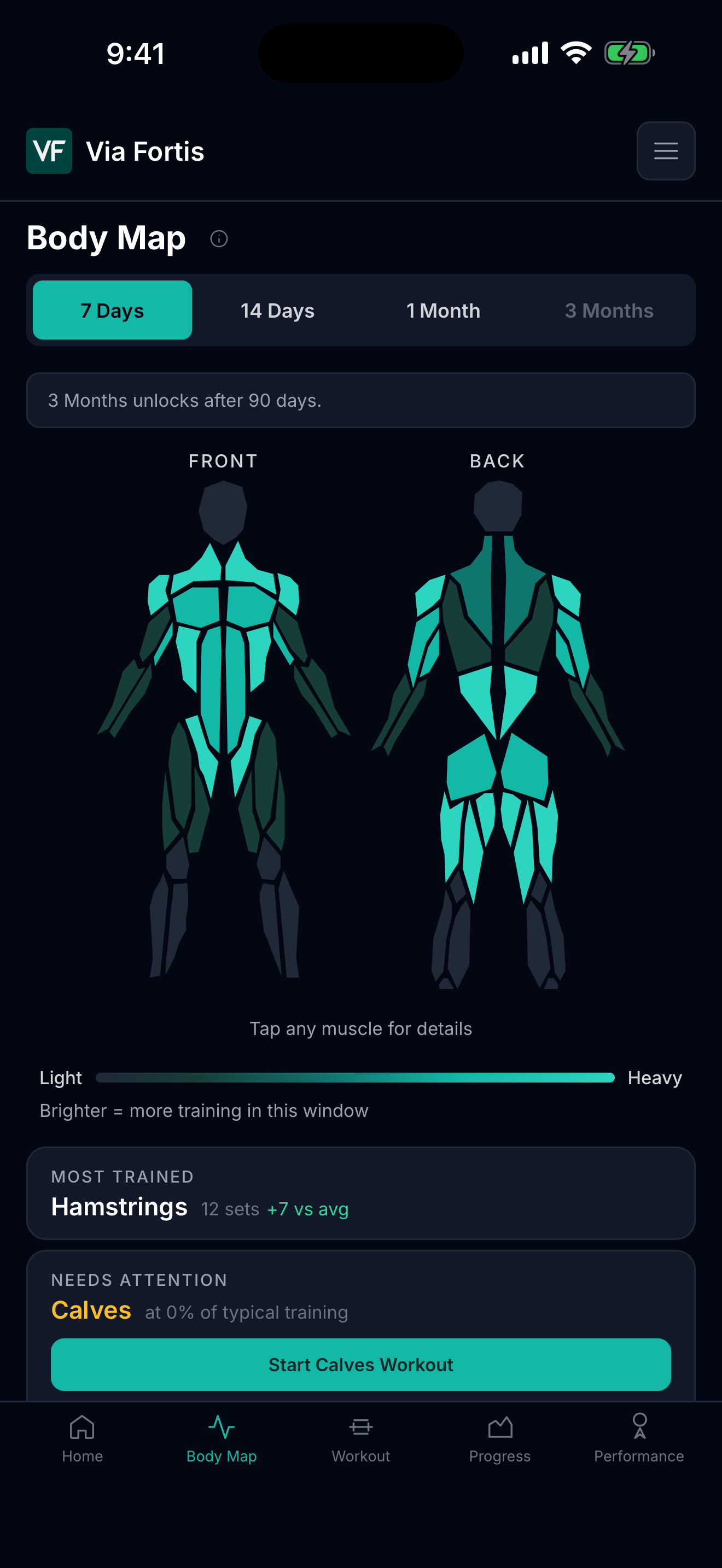
Recent Window
A short window can catch muscles that were left out of your latest run of sessions.
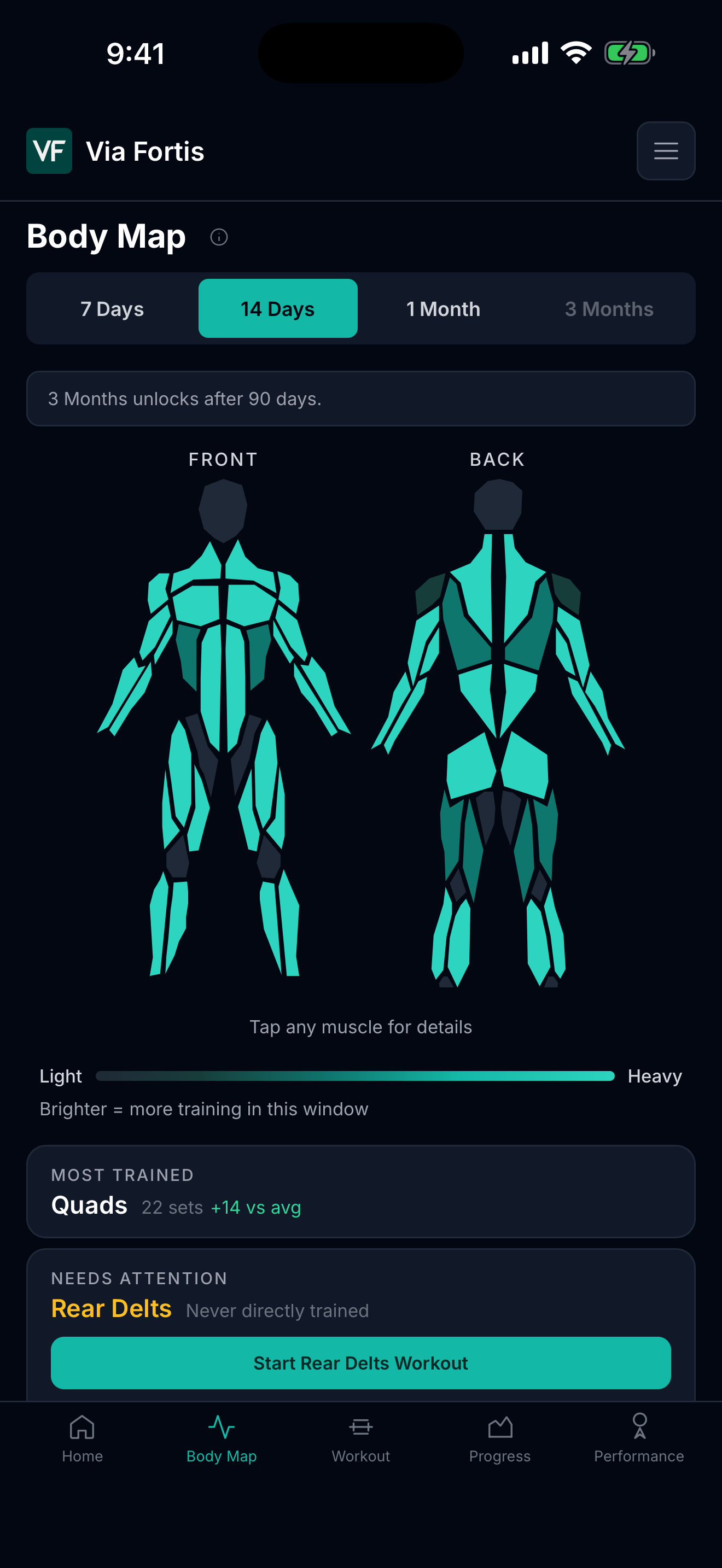
Direct Work
Some muscles assist bigger movements but still rarely show up as the main target.
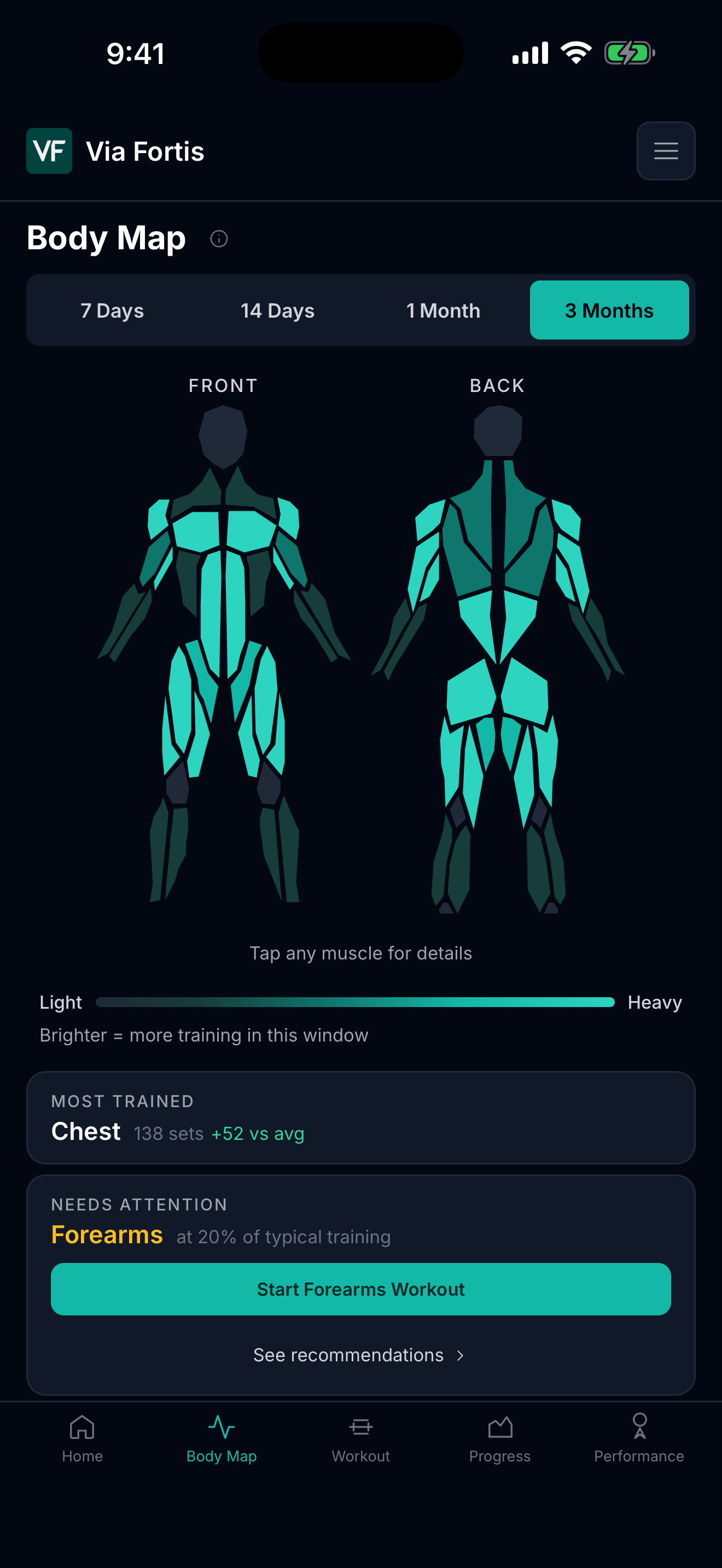
Longer Pattern
If the same area stays quiet over time, it may be a real feature of your program rather than a single missed workout.
FAQ
It depends on the lifter. Rear delts, calves, hamstrings, core, upper back, and adductors are common blind spots, but your own log is the best place to check.
Sometimes, but supporting work is not always the same as direct work. That is why coverage is more useful than just reviewing exercise names.
A weekly look can catch recent gaps. Longer windows can show whether those gaps are repeating often enough to adjust your training.
Download Via Fortis on iPhone, or try the free audit first to preview muscle coverage from your current program, typical training week, or recent workouts.